













What is agentic AI in procurement intake?
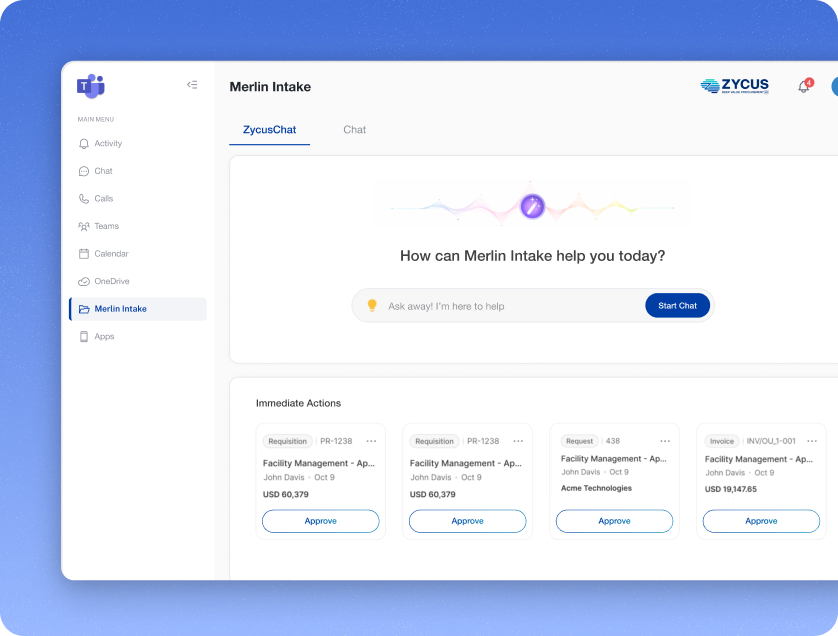
Agentic AI in procurement intake refers to autonomous AI agents that capture, validate, and route purchase requests end-to-end — without static forms, manual approval chasing, or rigid routing rules. Unlike traditional intake tools that digitize forms, agentic intake understands natural-language requests inside Microsoft Teams or Slack, enforces procurement policy automatically, and routes each request to the right sourcing or buying workflow. Zycus Merlin Intake, built on the Merlin Agentic Platform, is a built-in agentic intake agent designed for enterprise Source-to-Pay environments.
What is Merlin Intake and how does it work?
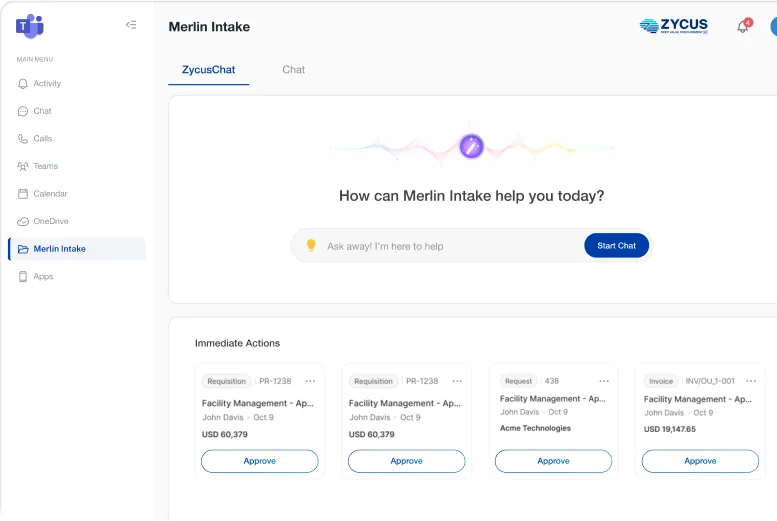
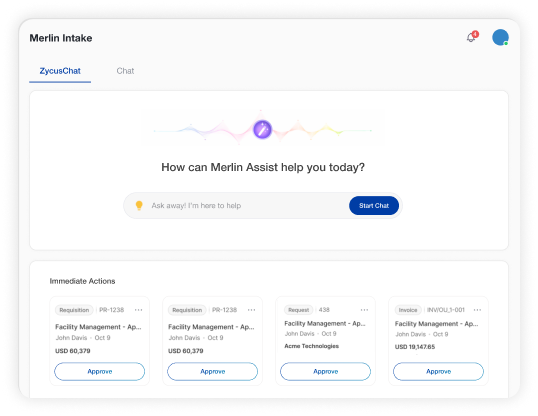
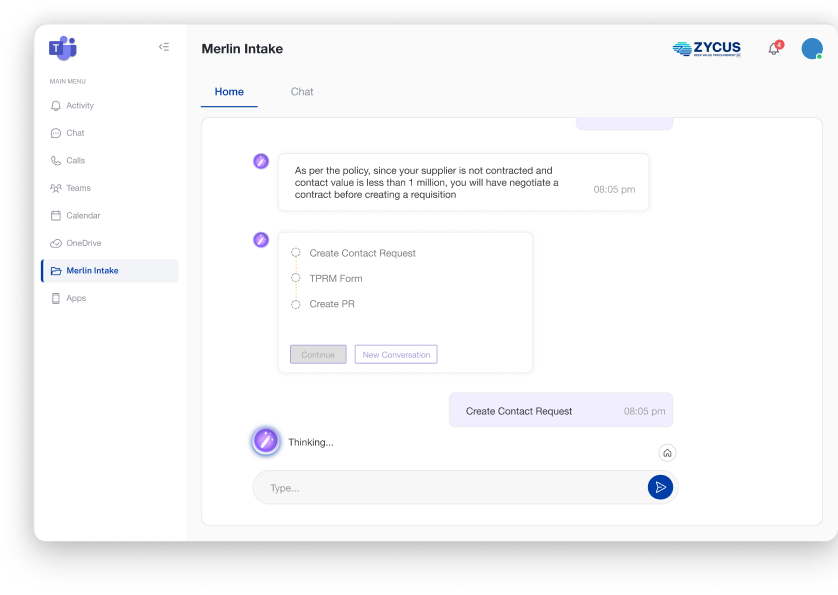
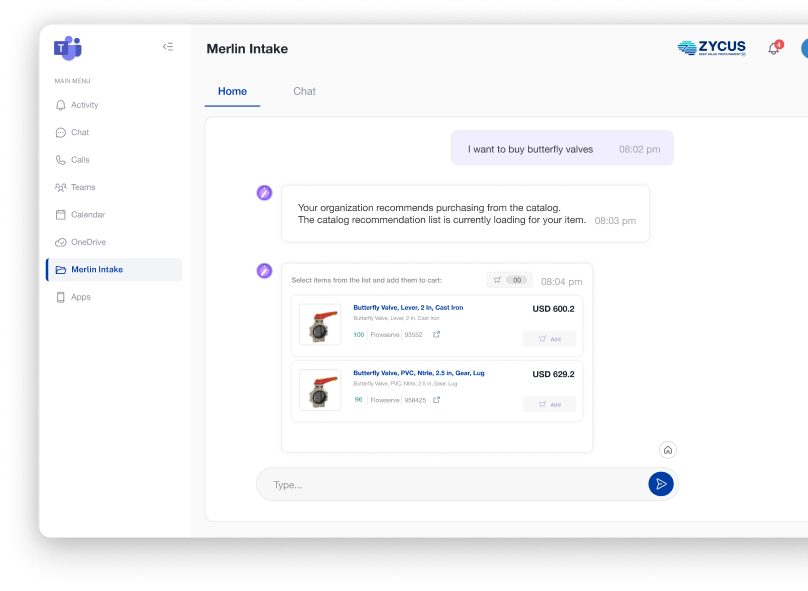
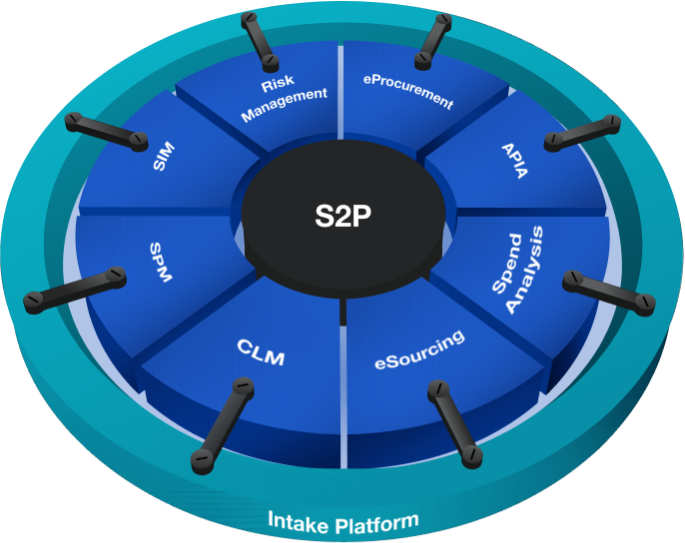
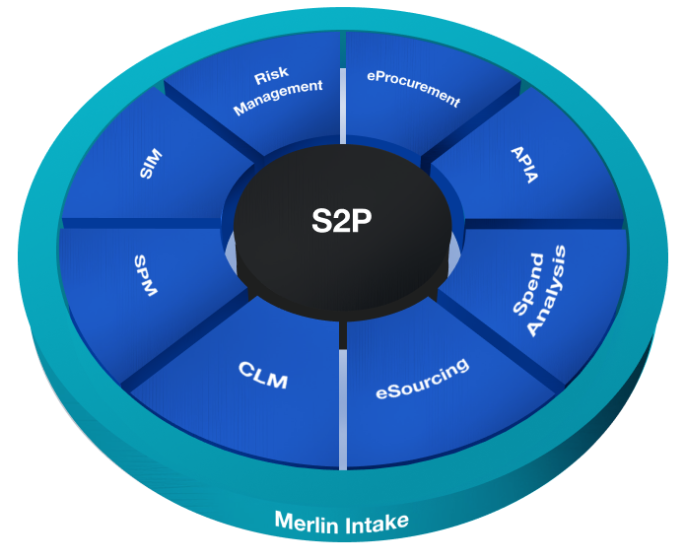
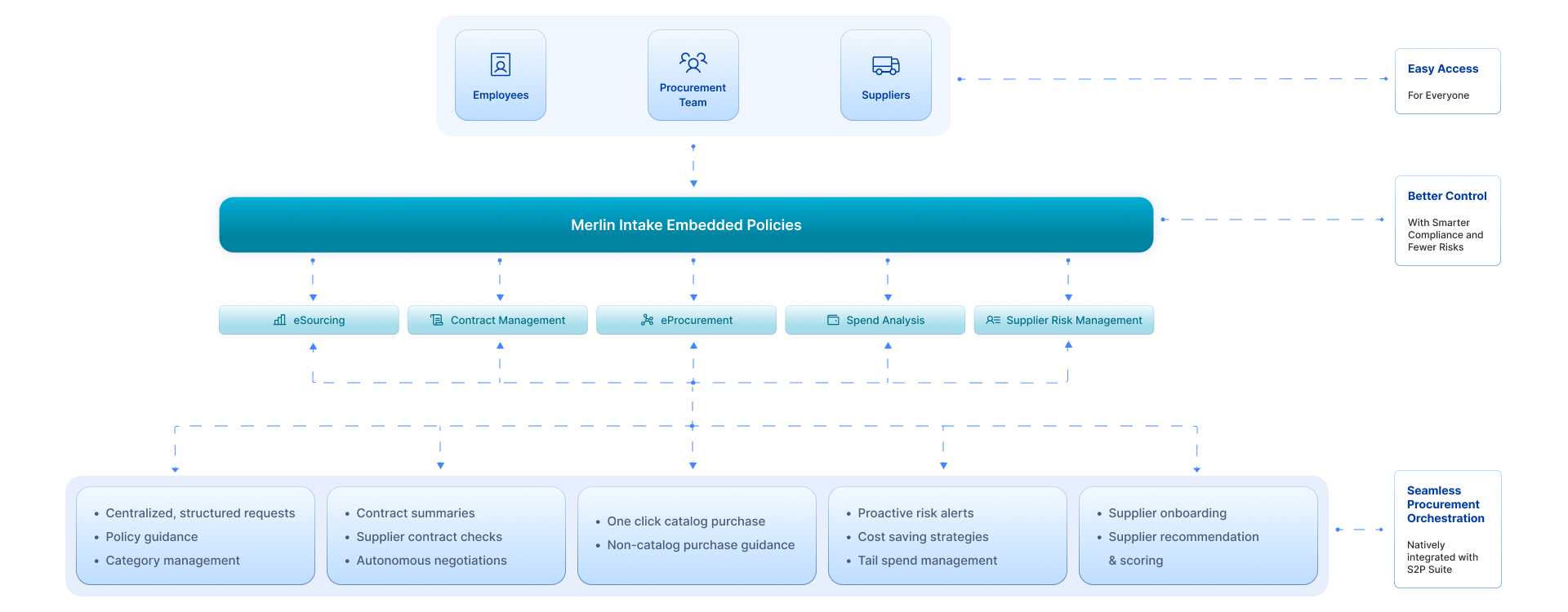
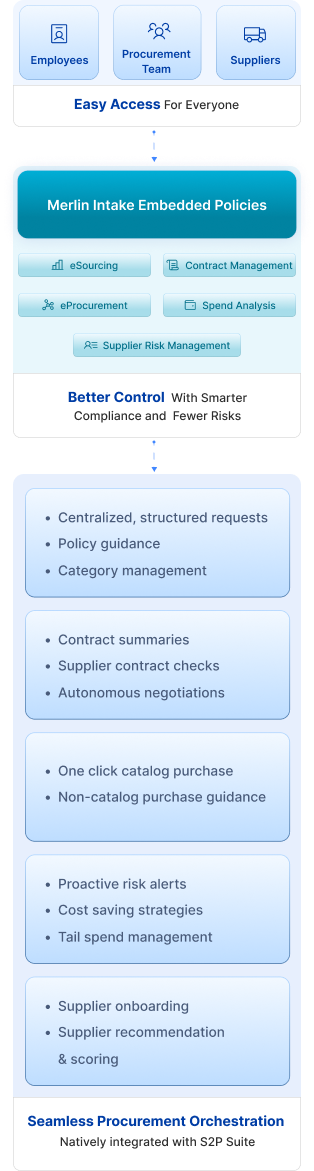
Merlin Intake is Zycus' AI-powered procurement intake agent and the front door to the Merlin Agentic Platform. Employees submit requests in plain language through Microsoft Teams, Slack, or email — Merlin interprets intent, classifies the request, checks it against procurement policy, and routes it to the right sourcing, contract, or buying workflow automatically. Built natively into Zycus' Source-to-Pay suite, it eliminates static forms, email chains, and manual approval chasing across the Intake-to-Outcomes (I2O) journey.
How does Merlin Intake use AI agents to automate procurement requests?
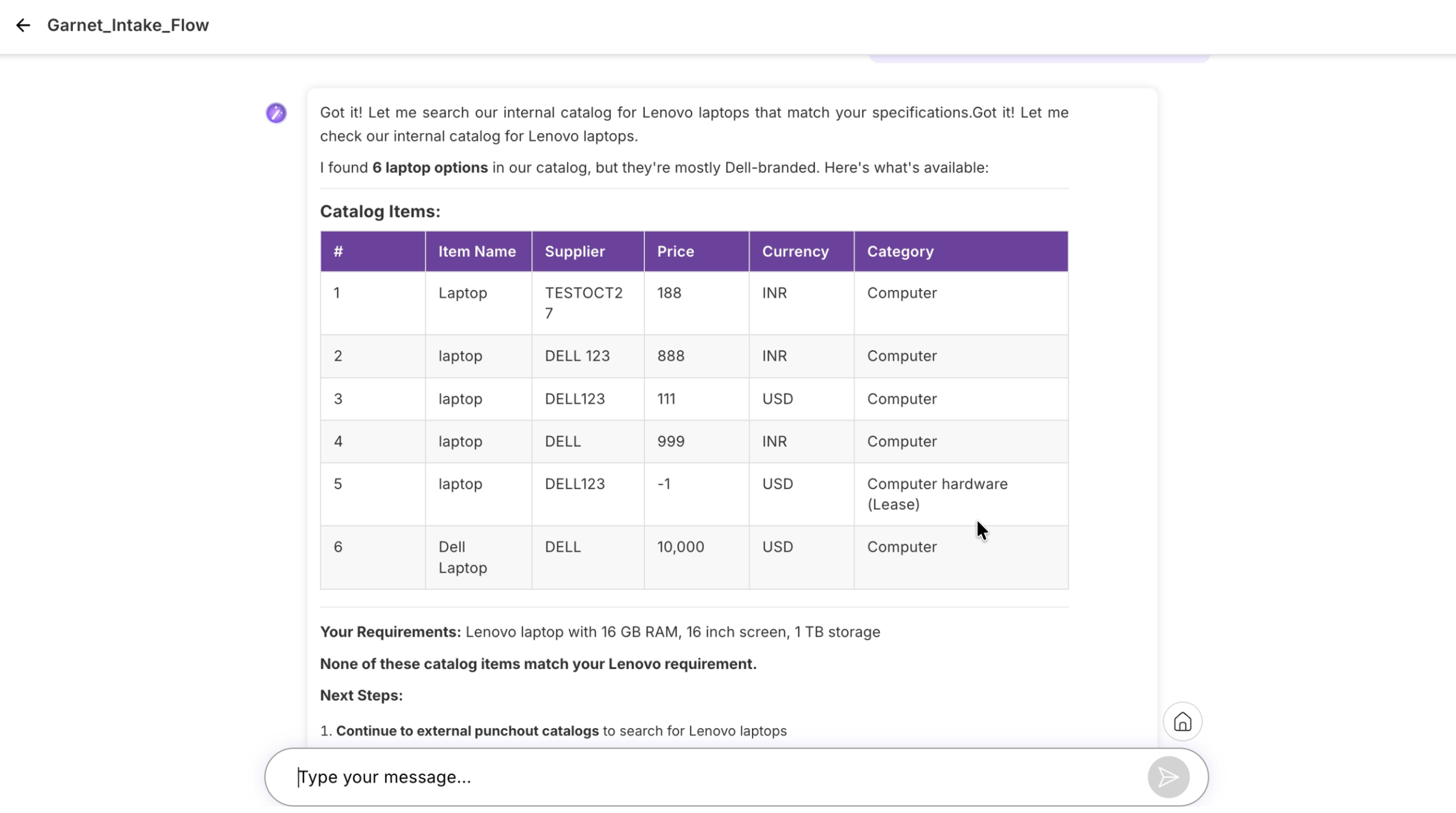
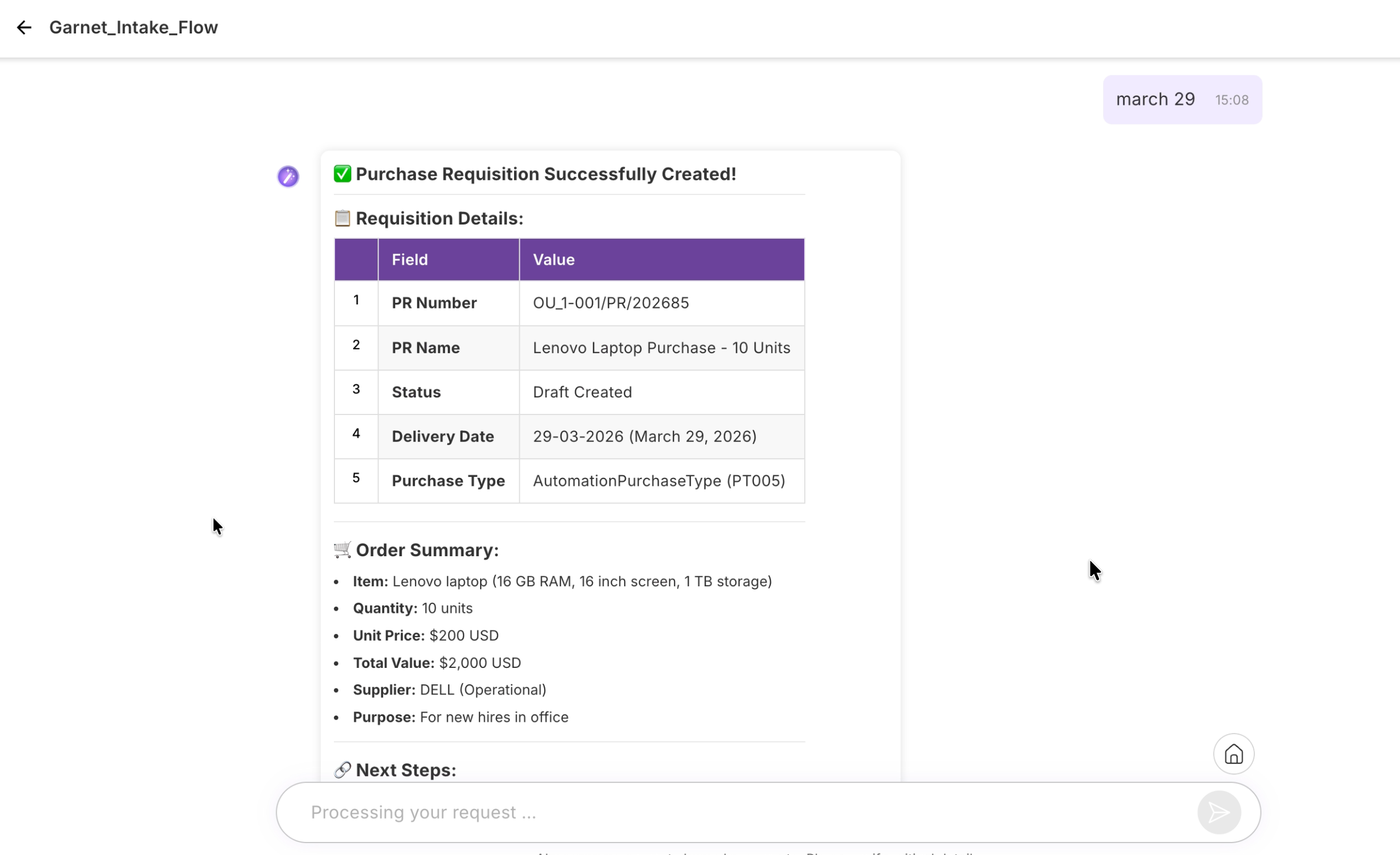
Merlin Intake deploys autonomous AI agents that handle procurement requests end-to-end — replacing the manual work of classification, routing, and policy enforcement. Each agent interprets natural-language requests, extracts supplier, category, budget, and urgency details, validates against procurement policy, and routes the request to the right workflow. Merlin Intake also hands off to other agents on the Merlin Agentic Platform — Merlin ANA for tail-spend negotiation, the Autonomous Supplier Onboarding Agent for new vendor setup, and the Merlin Analytics Agent for real-time insight — so intake flows all the way to outcome without manual intervention.
How is agentic intake different from traditional bolt-on intake tools?
Agentic intake is built into the Source-to-Pay platform and runs on autonomous AI agents; traditional bolt-on intake sits on top of procurement systems as a form-and-workflow layer. The difference shows up in three places: execution (agentic agents act on requests, not just capture them), policy enforcement (applied in real time by agents, not as downstream approval steps), and data context (Merlin Intake reads from the Zycus Data Core across spend, supplier, and contract records, making every decision context-aware).
Does Merlin Intake integrate with Microsoft Teams and Slack?
Yes — Merlin Intake is embedded natively inside Microsoft Teams and Slack, so employees submit procurement requests in the tools they already use. From the chat interface, users submit requests in plain language, receive AI-guided recommendations, check approval status, and complete approvals — without switching applications or logging into a separate procurement portal.
How does Merlin Intake enforce procurement compliance and cost control?
Merlin Intake enforces compliance and cost control at the point of request — before a PO is ever raised. Each incoming request is validated against procurement policy, preferred supplier lists, existing contracts, and budget thresholds in real time. Non-compliant or off-catalog requests are flagged or blocked, maverick spend is routed back into managed channels, and requests above spend thresholds are escalated automatically. This front-door enforcement is what shifts compliance from a downstream audit problem to a built-in behavior across the Intake-to-Outcomes journey.
How much time can AI-powered intake save in procurement cycles?
AI-powered intake management typically reduces procurement cycle times by 40–50% and eliminates most of the manual routing and approval-chasing work that consumes procurement teams. With Merlin Intake, requests are captured, validated, and routed autonomously in seconds rather than days — and downstream agents on the Merlin Agentic Platform pick up the work immediately, compressing the full Intake-to-Outcomes cycle from weeks to hours for common categories.